
Anna Wang,CEO & Co-Founder
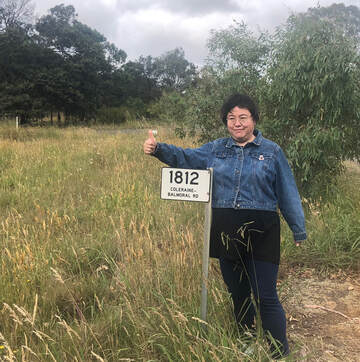
Ms Anna Wang graduated from Peking University's School of Software and Microelectronics. Following her studies, she partnered with her husband Lu Xiao to establish Beijing Rongchuan Technology Group Co., Ltd. in 2006, serving as its Chairperson and General Manager. During this period, she led and participated in the development of numerous projects including the JINHULU K12 Education Information System, JINHULU Electronic Blackboards, JINHULU Electronic Textbooks, Mongolian-Chinese Bilingual Teaching Resource Services, SHF Non-English Multimedia Information Presentation System, JINHULU Primary and Secondary School Electronic Libraries, and the Digitalisation Project for China's Grassland Nomadic Cultural Symbols. Primarily responsible for system architecture, client relations, and overall project management, he served as principal investigator for multiple initiatives.
Among these, projects such as electronic blackboards and digital textbooks have been adopted by primary, secondary, and higher education textbook publishers including People's Education Press, Beijing Education Press, Higher Education Press, Inner Mongolia Education Press, People's Music Publishing House, People's Fine Arts Publishing House, and Beijing Normal University Press. These serve primary and secondary schools as well as higher education institutions nationwide. The Jinhulu Education Server and JINHULU Primary and Secondary School Electronic Library products have been deployed in nearly 1,000 schools across Beijing, Henan, Hebei, Shaanxi, and Xinjiang. The ‘Mongolian-Chinese Bilingual Jinhulu Education Server’ is utilised in approximately 260 Mongolian-language primary and secondary schools in Inner Mongolia.
In the Digitalisation Project for China's Grassland Nomadic Cultural Symbols, Wang Na served not only as the principal drafter of the project proposal but also personally spearheaded its approval process with China's Ministry of Finance. As the project's principal investigator, she overseen the compilation of the project documentation, directed the development of the software architecture and data structures, and led the entire software component alongside the big data storage system. She was directly involved in both system development and testing. Completed over three years, this project has become one of China's standards for the digital preservation of intangible cultural heritage. Its 4K video digital storage technology represents a leading cultural digitisation technique.
In the development of the aforementioned products, Wang Na drew upon her technical expertise to spearhead the integration of cutting-edge digital and data storage technologies within the systems, thereby laying the groundwork for subsequent big data processing and the incorporation of artificial intelligence technologies.
In 2012, following Lu Xiao's proposal, Wang Na supported Rongchuan Technology in conducting research on solutions for urban construction waste disposal. Subsequently, she coordinated collaborations with the China Academy of Building Research, ancient architecture experts, and Jia Jianguo, former director of the Beijing Liuli Temple Glazed Tile Factory, to advance related research.
In 2015, the company completed the development of concrete exterior wall cladding technology using construction waste as aggregate material, with 85% of the aggregate sourced from construction waste. This innovation provided an effective solution to the challenge of urban construction waste management. As the Chairman of Rongchuan, Wang Na spearheaded the investment and led the development of this concrete wall panel technology. It resolved numerous technical challenges in concrete wall construction, such as installation complexity, cracking, and water leakage. Innovations were made in both structural design and construction methods, with particular emphasis on pioneering production techniques. Subsequently, a modular steel formwork system suitable for large-scale manufacturing was developed. The cladding panels underwent validation-stage production, with demonstration units constructed at the Zhuozhou R&D base in Beijing. System validation was further conducted across China and other nations, covering over 20,000 square metres of building area.
In autumn 2017, prioritising her two sons' (LEO, NEO) educational advancement and her own professional development, Wang Na relocated her family to Australia. She enrolled in the University of Newcastle's MBA programme, subsequently obtaining her professional qualification. In May 2023, she established NEO Robotics Pty Ltd.
Among these, projects such as electronic blackboards and digital textbooks have been adopted by primary, secondary, and higher education textbook publishers including People's Education Press, Beijing Education Press, Higher Education Press, Inner Mongolia Education Press, People's Music Publishing House, People's Fine Arts Publishing House, and Beijing Normal University Press. These serve primary and secondary schools as well as higher education institutions nationwide. The Jinhulu Education Server and JINHULU Primary and Secondary School Electronic Library products have been deployed in nearly 1,000 schools across Beijing, Henan, Hebei, Shaanxi, and Xinjiang. The ‘Mongolian-Chinese Bilingual Jinhulu Education Server’ is utilised in approximately 260 Mongolian-language primary and secondary schools in Inner Mongolia.
In the Digitalisation Project for China's Grassland Nomadic Cultural Symbols, Wang Na served not only as the principal drafter of the project proposal but also personally spearheaded its approval process with China's Ministry of Finance. As the project's principal investigator, she overseen the compilation of the project documentation, directed the development of the software architecture and data structures, and led the entire software component alongside the big data storage system. She was directly involved in both system development and testing. Completed over three years, this project has become one of China's standards for the digital preservation of intangible cultural heritage. Its 4K video digital storage technology represents a leading cultural digitisation technique.
In the development of the aforementioned products, Wang Na drew upon her technical expertise to spearhead the integration of cutting-edge digital and data storage technologies within the systems, thereby laying the groundwork for subsequent big data processing and the incorporation of artificial intelligence technologies.
In 2012, following Lu Xiao's proposal, Wang Na supported Rongchuan Technology in conducting research on solutions for urban construction waste disposal. Subsequently, she coordinated collaborations with the China Academy of Building Research, ancient architecture experts, and Jia Jianguo, former director of the Beijing Liuli Temple Glazed Tile Factory, to advance related research.
In 2015, the company completed the development of concrete exterior wall cladding technology using construction waste as aggregate material, with 85% of the aggregate sourced from construction waste. This innovation provided an effective solution to the challenge of urban construction waste management. As the Chairman of Rongchuan, Wang Na spearheaded the investment and led the development of this concrete wall panel technology. It resolved numerous technical challenges in concrete wall construction, such as installation complexity, cracking, and water leakage. Innovations were made in both structural design and construction methods, with particular emphasis on pioneering production techniques. Subsequently, a modular steel formwork system suitable for large-scale manufacturing was developed. The cladding panels underwent validation-stage production, with demonstration units constructed at the Zhuozhou R&D base in Beijing. System validation was further conducted across China and other nations, covering over 20,000 square metres of building area.
In autumn 2017, prioritising her two sons' (LEO, NEO) educational advancement and her own professional development, Wang Na relocated her family to Australia. She enrolled in the University of Newcastle's MBA programme, subsequently obtaining her professional qualification. In May 2023, she established NEO Robotics Pty Ltd.